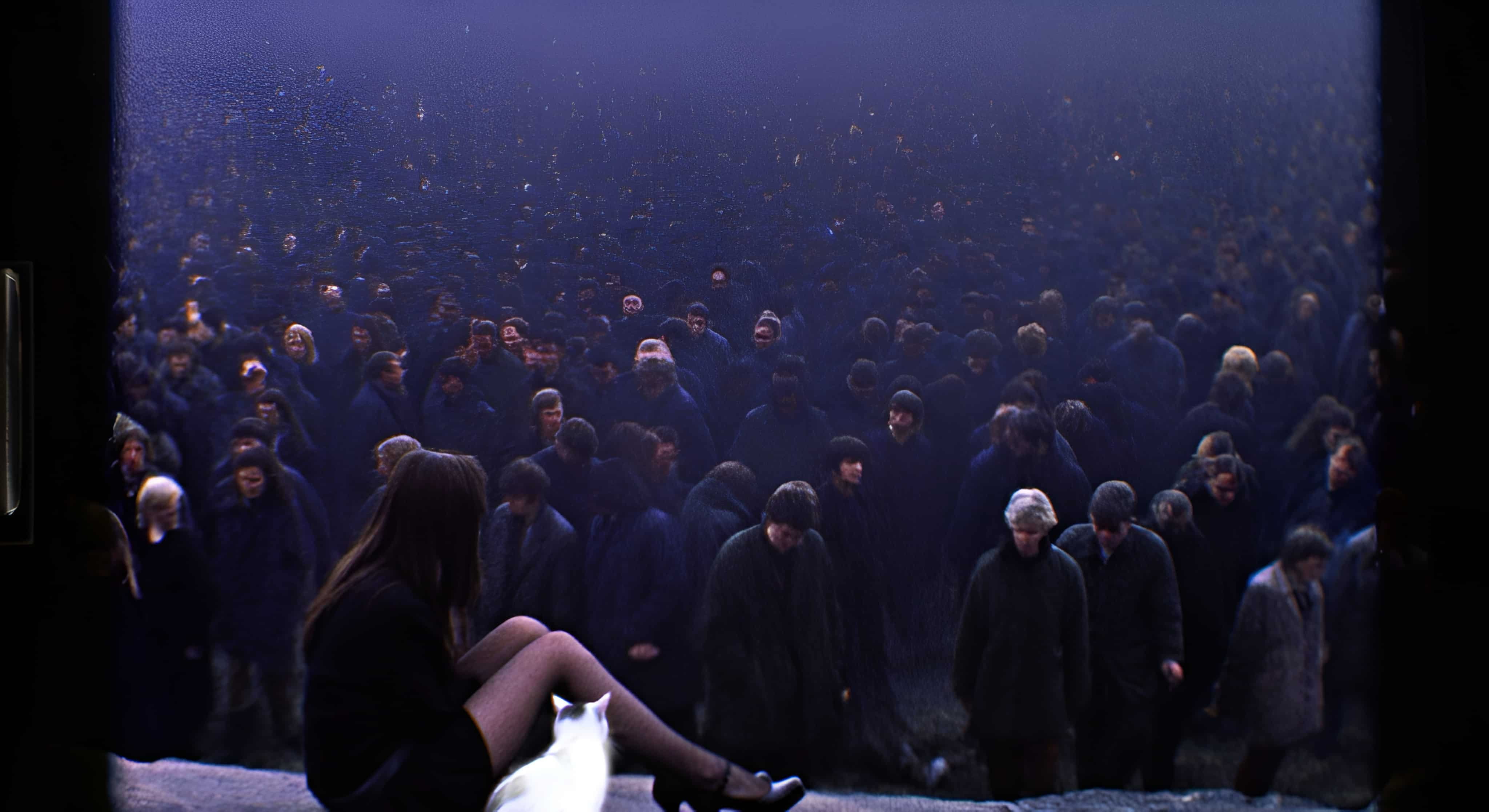
There's a pattern that's followed me everywhere: school, random jobs, tech, founder life.
I walk into a system, watch how it treats people, and within a few weeks my brain is doing the same thing it always does: a. who's actually doing the work, b. who's capturing the value, and most importantly: c. who's quietly getting fucked?
Once I see the answers, that's it, it's over, I can't unsee them. I can't pretend it's fine or "be professional" about it anymore. I start asking loaded (read: annoying) questions, pulling at loose threads, pointing at the seams everyone agreed to ignore. It really irritates people. It always has.
Teachers hated it. Some friends hated it. Managers hated it. Colleagues who worship process especially hated it too. Every environment has its high priests of "this is how we do things", and I absolutely suck at playing along.
Somewhere in the last few months though... I made peace with that. I'm not on the "be chill and accept things" timeline anymore. I'm on the timeline where, if I have to exist inside a system, I'm going to fuck with its geometry until it stops grinding down the people carrying the weight.
This is for the ones who do the work.
The Rigged Default
When I say the system, I don't mean to sound like a tin foil hat conspiracy theorist. I'm talking about the boring default logic you see everywhere: the people at the edge do the hard and messy work, those in the middle manage and reframe it, and those at the top extract as much value as possible, rebranding it as "efficiency" or "innovation."
These roles are not inherently evil. Coordination matters. Strategy matters. Capital can be useful. Yes, I know. Fine. I'm not twelve.
What I hate is the ratio. Too many people that build nothing, risk nothing, yet that still get to call the shots and collect the upside.
It's death by a thousand cuts. None of it is spectacular. It's just the slow, quiet drift of everything toward those with leverage, and away from those who actually do the work.
Tech Was Supposed to Be a Gift
The part that really sets me off is tech.
We were handed this phenomenal toolbox: instant communication, cheap computation, global distribution... We could have decided, as an industry, that this is how we make life easier for the people who actually do things; instead, we keep fucking building very very good extraction machines.
"We build a bridge between demand and supply!", and then we all watch like a bunch of idiots as we get fucked while they keep widening the toll booths on both ends.
I'm not naive. Greed isn't going away. Companies will always try to push the line and see what they can get away with. But I don't have to play that game. I don't have to internalize that ethos like it's the only adult option on the table. I can decide that, if I'm going to spend my life writing code and building products, it will be for people who actually touch reality. The ones in the rain, on the phone, in front of the client, in the museum, on the bus, in the fucking field.
If tech is not helping everybody in the equation, what's the point.
"Everyone Wins" Is Not Naive
Every single time I push for this, I immediately hear: "you're idealistic", "you don't understand business", "that's not how the world works."
Cool story. All I hear is:
"I lack imagination and got used to giving in to the system as a fixed cost."
I am not the enemy here. I don't want a world where the "winners" stop winning. I know, and I've learned, and as much as everyone else has, that in order to win, you don't have to actively try to grind everyone else into paste. It is not a requirement for building a successful business. If you sit with the people getting screwed over, you realize a lot of the harm is unnecessary.
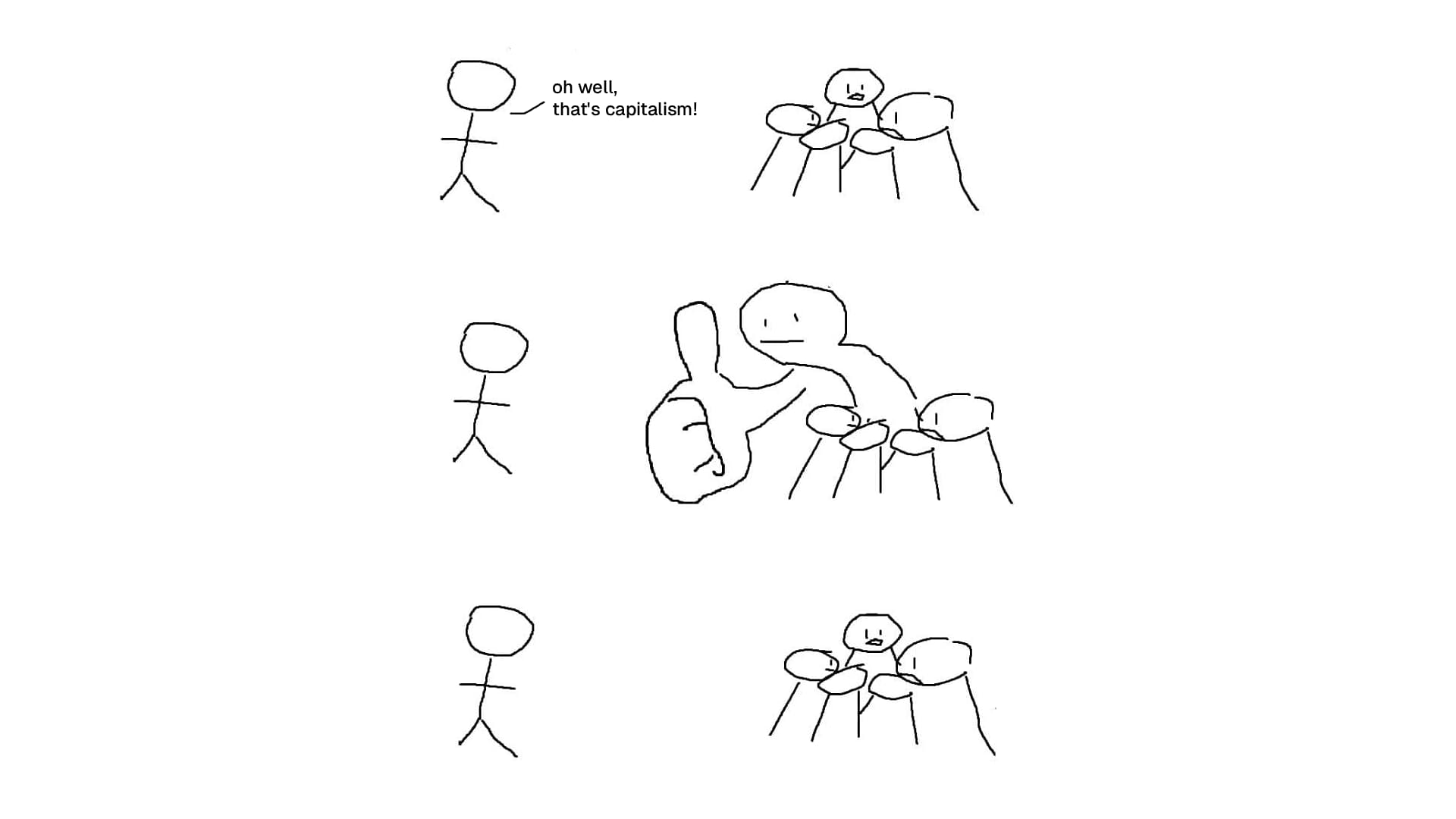
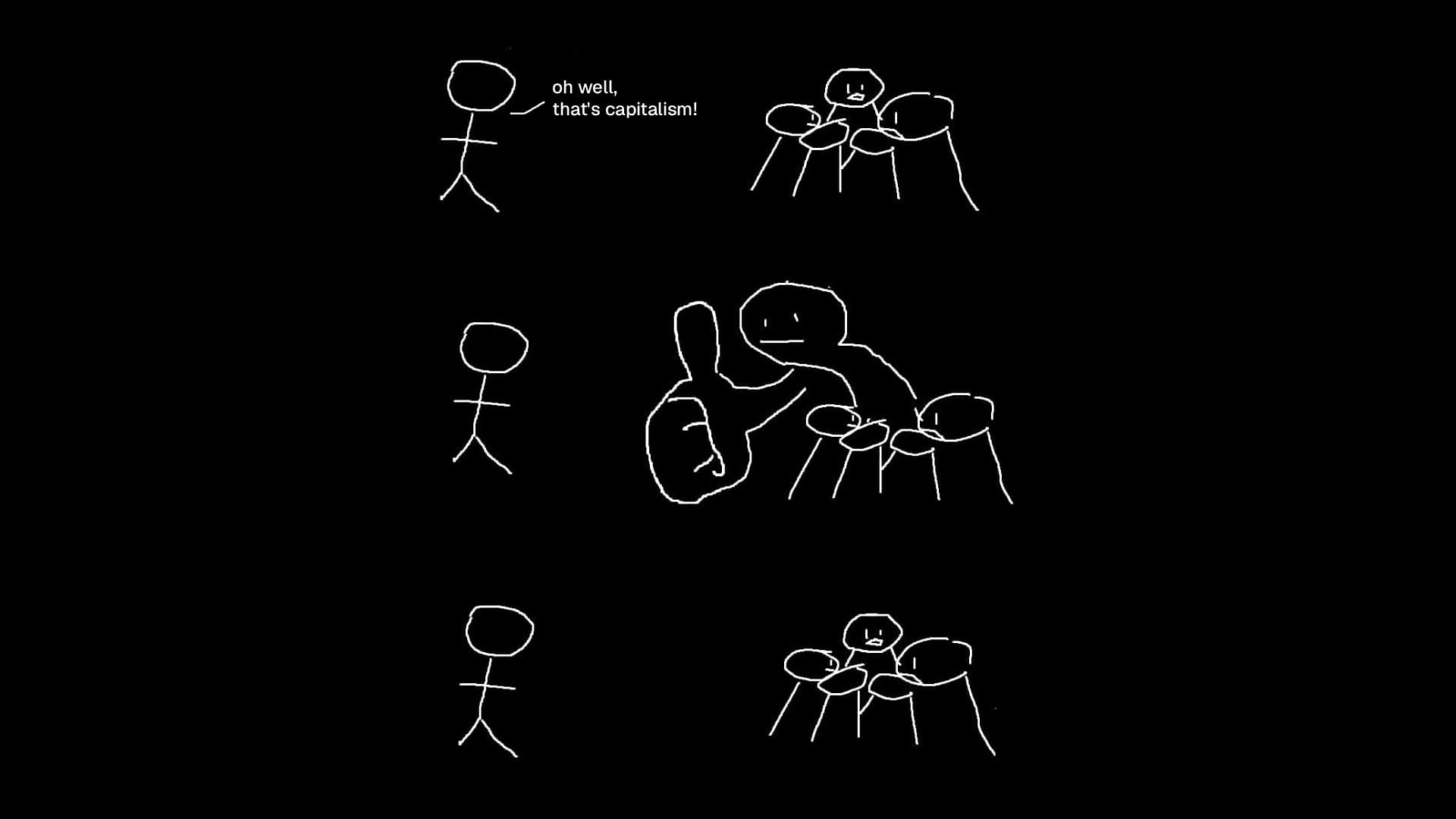
None of this is inevitable. It's just what happens when you optimize only for one axis and call everything else "edge cases". My vision of Good Systems™ is that they let the people who already benefit keep benefiting while pulling more people onto the podium. It is not zero-sum.
The Dark Side is Always There
I'd love to pretend I've always been perfectly consistent with all of this. I haven't. There have been a lot of moments in my life where I've hit that wall of frustration and thought:
You know what? Fuck it. I'll just go to the dark side. I'll optimize for money, build whatever prints cash, ignore the rest, and buy myself a quiet life. Fuck them, fuck the game, fuck everyone.
And I get why people do it. When you've been ignored, undercut, or treated like you're annoying for simply pointing at obvious problems, there's a part of you that just wants to cash out and stop caring. It's self-defense. You look at how the world treats people who play fair, and it's tempting to say, "Fine, I'll stop trying to be one of them."
But every time I get close to that edge, it's the same kind of thing that drags me back: real people doing real work, telling me exactly how the system is failing them. Guide, coworkers, friends, random conversations. The pattern shows up again, and I remember why I'm angry in the first place.
I think you should have strong feelings about this stuff, and about what you want to stand for in your life. I think you should have goals in life that are bigger than "be comfortable and unbothered." And I think trying to stick to those, even when it would be easier to bail on them, is part of what makes you an actual member of society instead of just a spectator, or dare I say it, a bystander.
 Helm as a Line in the Sand
I could have ended up in any number of industries, and the same dynamic would appear: searching for the place where the real work happens, seeing where people are drained by the system, and noticing how those in power quietly keep it that way.
But it was tourism, where I met my co-founders, and where all the pieces finally came together and the picture locked into focus. Here were guides who had studied, trained, earned their stripes, and who actually cared. There were agencies wrestling with logistics, schedules, and the weight of client expectations, always somehow keeping the machine moving. And layered above all of it stood the familiar presence of platforms and middlemen, ready to skim their share off the top. This makes me seethe.
Helm is my decision to stop yelling at the system.
Still, I don't want to pursue some "disruptive" fantasy where we replace every existing actor and crown ourselves the new giant. Instead, I want to build a more sustainable alternative that a. makes the people on the ground radically more equipped, b. makes the flows saner for the agencies doing the coordination, and c. leaves enough room that the ones already "winning" don't need to lose, they just need to adapt.
To Be Cringe is to Be Free
Maybe all of this sounds rebellious, dramatic, cringey, whatever.
"You'll grow out of it."
"You'll see how things really work."
"You can't fix everything."
Yes, indeed. But I am not trying to fix everything. I'm trying to pick my corner of the world and refuse the lazy version of "how things are".
I'm not pretending I'm better than everyone. I'm not pretending I don't benefit from the same structures I'm criticizing. I'm not even pretending I'm right about everything.
What I am saying is I saw some places where people are getting screwed, I didn't want to be part of it, and I'm going to build a better system where the people who carry the weight aren't last in line.
If that's naive, them I'll die naive. I'd rather go out on that hill, than fully "adjusted" to a world where everyone shrugs and calls preventable harm "just business."
The world will stay shitty. People will stay greedy. Fine. I still get to choose my ethos. I still get to decide who I build for. I still get to draw a line where I want it, and pick which side I want to be on.
And I'm going to keep doing that, product by product, team by team, until the very last sprint I ship.
This is for the ones who do the work.